
Okay, so check this out—Solana feels fast. Really fast. Whoa! For the past year I kept finding myself refreshing wallets and wondering why some transactions looked like ghosts on-chain. My instinct said there had to be a simpler way. Initially I thought a wallet UI would be enough, but then I dug deeper and found tools that actually tell a story about each transaction, not just a green checkmark.
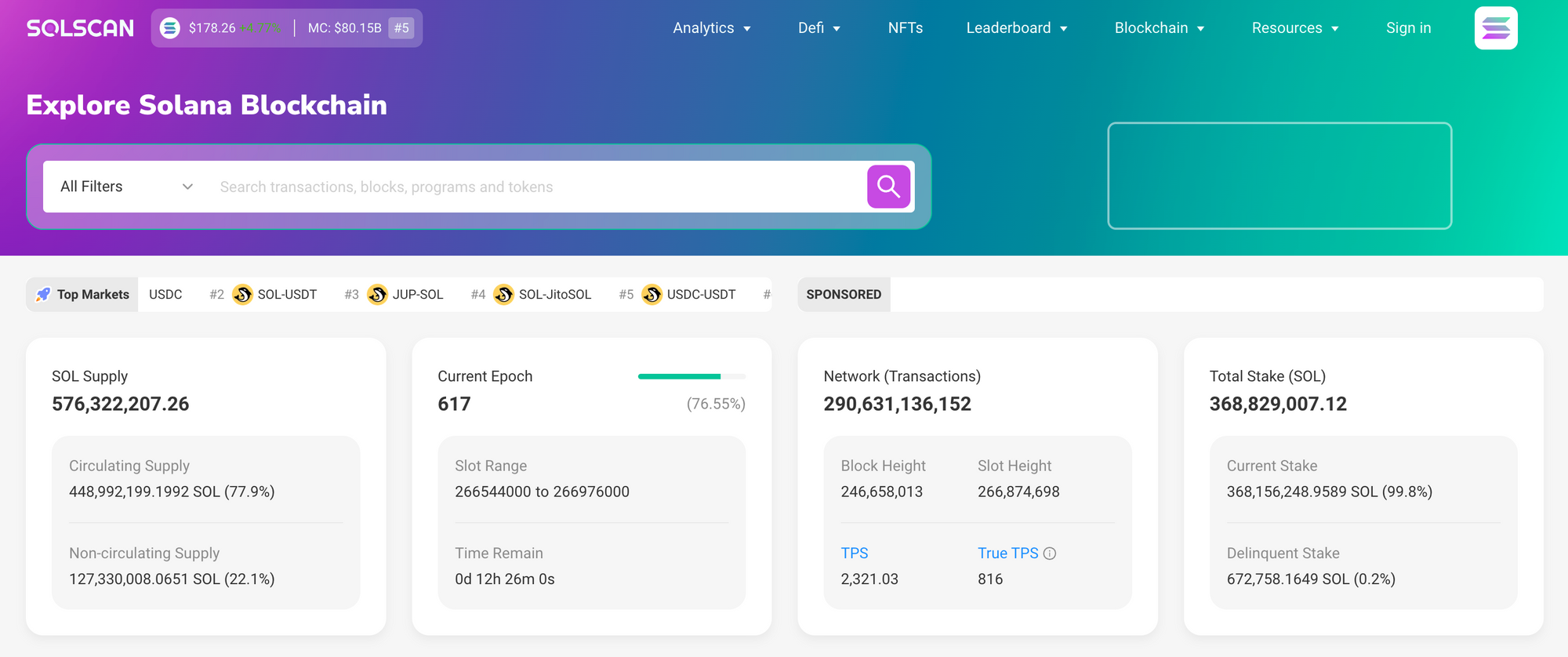
Solscan is the one I keep coming back to. Seriously? Yep. It surfaces raw transaction details, inner instructions, rent-exempt balances, token transfers, and program logs in ways a basic wallet doesn’t. At first glance it can be overwhelming—lots of hex and program IDs—but once you know where to click, the clarity shows up. I use it when things feel off, like when a transaction is “confirmed” but the token balance hasn’t changed, or when a swap fails and I want to see whether the DEX returned an error or gas ran out. Something felt off about many explorers; Solscan nails the UX for Solana specifics.
Why explorers matter for SOL transactions
Short answer: transparency. Long answer: transactions on Solana aren’t just “sent” or “failed”—they have a lifecycle involving signatures, confirmations, blockhashes, program interactions, and often multiple token instructions that move value between accounts. Hmm… on one hand, wallets abstract all that away so regular users aren’t scared. On the other hand, when things go sideways you need a forensic tool. Solscan gives that forensic layer without making you a full-time developer.
Here’s the practical bit. When you paste a transaction signature into Solscan you get a timeline: which node confirmed it, how many confirmations, exact lamport fees paid, the sequence of program calls, and token transfers expressed with decimals so you don’t have to convert lamports in your head. And—I’ll be honest—this part bugs me less than it used to, because Solscan groups inner instructions so you can quickly see which program did the heavy lifting. Also, sometimes you’ll see duplicate logs or retry attempts. Those tell you about network retries or partial failures.
Okay, one quick pro tip: use the “Account” view to inspect token accounts tied to a wallet. Many users assume their SOL balance equals their token holdings’ visibility. Not true. Solana uses associated token accounts, and if you’re tracking NFTs or SPL tokens, seeing the exact account owner and rent status matters. I’ve lost track of how many times a “missing token” was simply in an unexpected associated account. (oh, and by the way…)
Check it—if you want to get straight to the official Solscan interface, here’s a handy place to start: here. Use that as your jumping-off point when you want to: verify a tx, audit an airdrop, or just see program logs in plain language.
Common problems and how Solscan helps
Failed swap? Look at program logs first. They often show the exact error code returned by a Serum or Raydium program. Wow. Stuck transaction? The explorer reveals whether the blockhash expired or whether there were duplicate signatures. Wallet UI said “processing” but the explorer shows “confirmed”—that’s usually a local cache issue.
Another neat thing: token transfers show decimals, mint addresses, and whether a token account was created during the transaction (and how much rent was paid for it). Initially I thought that rent-exempt flags were trivial, but then I paid for creating many tiny token accounts and realized those fees add up—especially if you’re a dev running tests. Actually, wait—let me rephrase that: those per-account costs are small individually, but at scale they matter a lot for projects minting many tokens.
Also, for devs and security folks, Solscan exposes program IDs and instruction data in a decoded form for many popular programs, which speeds triage. On one hand it’s a convenience. On the other hand, it encourages lazy assumptions—so double-check raw bytes if something’s high risk. My gut said “trust but verify” and I follow that, though I’m not 100% perfect at it.
Practical walkthrough — what I click first
1) Transaction signature field. Paste it. Hit enter. Short. Then breathe. Next—scan the top line for status: success, failed, or partial. If failed, jump to logs. If success but funds missing, check inner instructions for token transfers (they might have moved via a bridge or program-owned account).
2) Confirmations and block time. These tell you where the transaction sits in history. Sometimes explorers show multiple confirmations while a wallet hasn’t updated—cache again. Click the block to view neighbor transactions if you suspect network congestion spikes or cluster-wide events.
3) Accounts list. This is where the owner, balance changes, and rent transitions live. If you see a new account created, the explorer will show rent lamports charged. That could explain unexpected fees or missing SOL amounts, and it’s a clue when debugging automated mints or airdrops.
4) Logs and instruction decode. This is the meat. If you’re building or auditing, read it slow. On complex transactions you might see calls to multiple programs. Follow the sequence—sometimes a single user action triggers swaps, approvals, and token transfers across several programs in one atomic transaction. It impresses me every time how much is packed into one signature.
FAQ
How do I verify a transaction is legitimate?
Look for the signature in Solscan and inspect the program IDs involved. Confirm that token mints match expected addresses, and review logs for any suspicious instructions. If a dApp asked you to sign something odd, trace the instruction flow—did it call only the intended program or additional program IDs? That often tells the story. I’m biased toward extra caution, but that saved me once when an app tried to bundle unrelated approvals into a user action.
What if I can’t find a token I expect?
Search the wallet’s associated token accounts and the transactions that created them. The token might live in a different associated account or be stuck awaiting a token account creation fee. Also check mint addresses—tokens with the same symbol can be different mints, so always confirm the exact mint.
Leave a Reply